
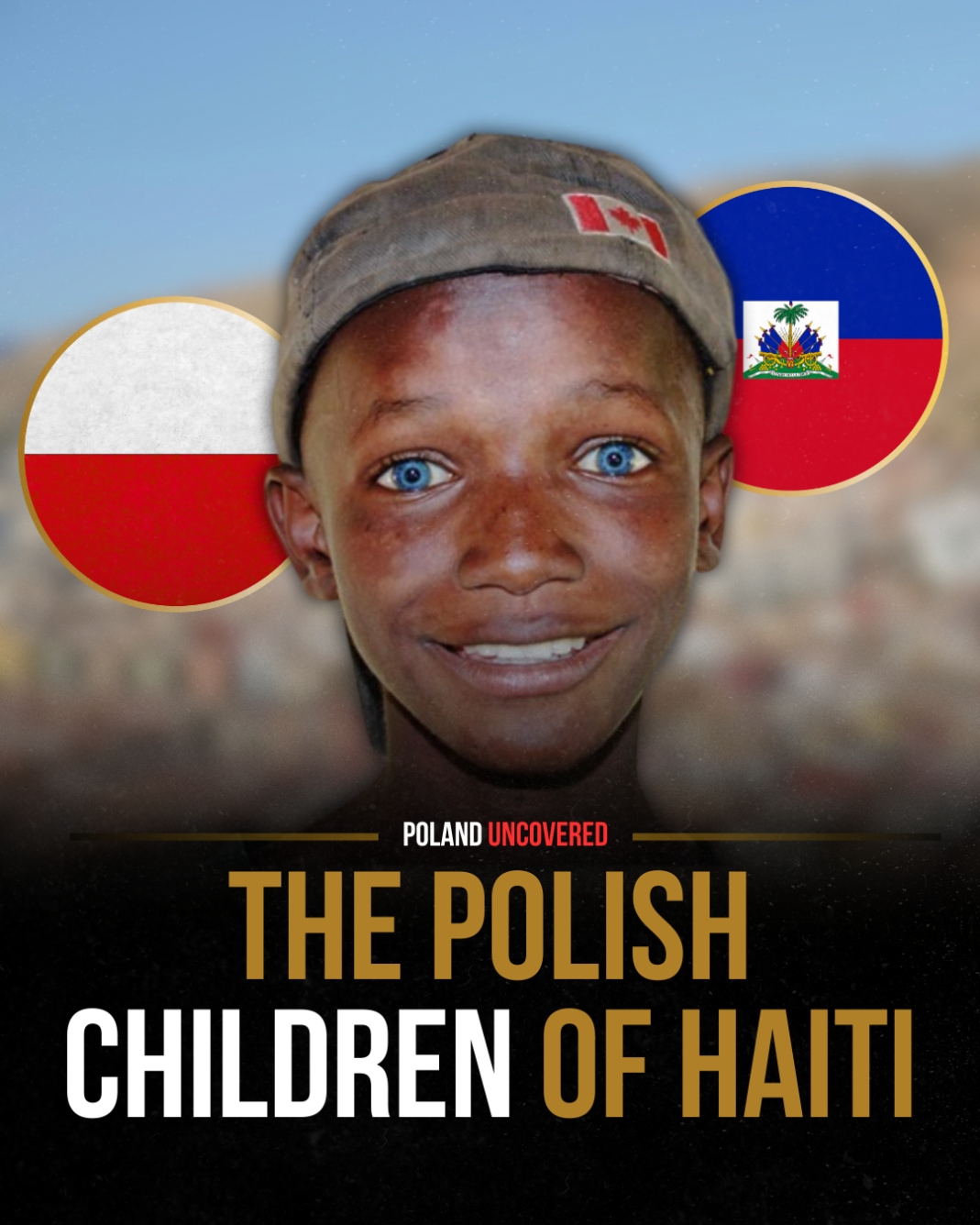
At first glance, Poland and Haiti seem to have very little in common. They’re on opposite sides of the world, with a completely different cultures and languages. And yet, there’s a surprising and very real connection between the two that goes back more than 200 years.
To understand how Poles ended up in Haiti, you have to start with a time when Poland itself didn’t exist.
Poland without a country
In the late 18th and early 19th centuries, Poland had been wiped off the map of Europe. After a series of partitions carried out by Prussia, Russia, and Austria, the Polish state ceased to exist entirely.
Many Polish soldiers found themselves serving in foreign forces, often with little choice in the matter. One of those armies belonged to Napoleon Bonaparte, who promised that helping him might one day lead to the restoration of Poland.
Sent to suppress a slave revolt
In 1802, Napoleon sent several thousand Polish troops to the French colony of Saint-Domingue, modern-day Haiti. Their mission was to help crush a massive slave uprising led by formerly enslaved Africans who were fighting for independence from France.
What made the situation deeply uncomfortable for many Polish soldiers was the obvious parallel. They were being ordered to suppress another nation’s fight for freedom, while they were fighting for their own independence back home.
Choosing sides
Some polish soldiers refused to fight with the French. Others deserted. And a significant number went even further… They joined the Haitian revolutionaries.
Polish soldiers ended up fighting alongside leaders like Jean-Jacques Dessalines, who would later become Haiti’s first ruler. They shared tactics, weapons, and battlefield experience, helping the rebels defeat one of the most powerful empires in the world.
When Haiti declared independence in 1804, it became the first successful slave republic in history. The role played by the Poles was not forgotten.
“European Blacks” in Haiti
After independence, Dessalines made a radical decision. To protect Haiti from future European colonialism, the new constitution declared that all Haitian citizens were Black, regardless of skin colour. It was a political move meant to reject the racial hierarchies used to justify slavery.
However, Poles were given special recognition.
Because they had refused to act as colonial oppressors and had fought for Haitian independence, they were granted full citizenship and symbolically included in this definition.
This is where the phrase often paraphrased as “European Blacks” comes from. It’s not an insult; it’s a powerful statement of solidarity.
In practical terms, Poles were accepted as equals in the new nation.
Polish blood in Haiti today
Some Polish soldiers returned to Europe, while others stayed in Haiti.
Those who remained settled in isolated communities, particularly in mountainous areas like the village of Cazale.
Over generations, their descendants became fully Haitian, while still preserving stories of their origins.
Even today, some Haitians have lighter skin tones, European facial features, or occasionally blue or green eyes. Locals often trace these traits back to Polish ancestors, and the oral history around this connection remains strong.
In places like Cazale, Poland is sometimes referred to as the “mother country” and Polish visitors are welcomed warmly.
Why this story matters
For Poles, this episode stands out as a moment in history where Polish soldiers fought against imperialism. They helped create the first successful slave republic and were remembered positively far from Europe.
For Haitians, Poles are not remembered as colonisers, but as brothers-in-arms.
It’s a rare historical case where shared suffering created a lasting bond between two very different nations.